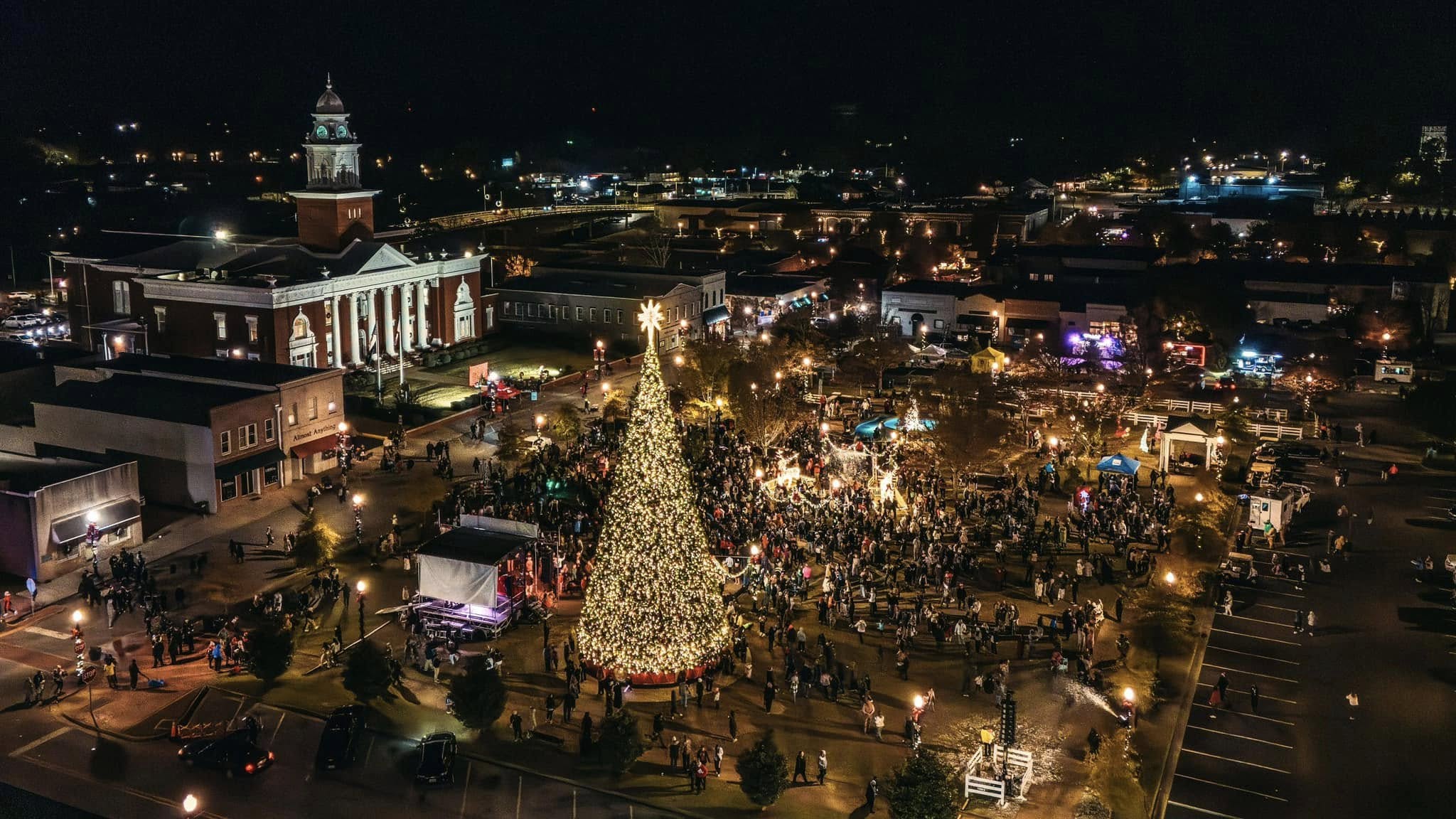
While we love helping downtowns execute their holiday light displays, we don’t want that effort to go unnoticed. You’ve spent months planning the display, everything is hung with care, and with the proper planning, you can certainly create a destination.
A tree lighting or a round of caroling pulls a crowd for a night or two, but a well-designed light display can draw people back every evening from mid-November through January, even beyond! A holiday event is a great way to bring community through your town, but weeks of reason to come lets the holiday cheer linger a little longer.
Here’s how to make the most of it, from the first press release to the last string of lights. No elves required.
Know What You’re Measuring
What’s a plan with no goal? A road trip with no destination. We all want a great destination, so don’t pass over the steps to get you there. Decide what winning actually looks like for your community. This can come in different shapes and sizes; a downtown chasing foot traffic plans differently than one chasing vendor sales or email sign-ups.
Here are some common goals worth choosing from:
- Foot traffic: more people downtown, period, to build the case for future investment
- Vendor sales lift: direct revenue for the businesses that show up and staff the night
- Email or text signups: a list you can market to well past the holiday season
- Return visits: turning a one-night visitor into a regular
- Media and social reach: press pickup and shares that raise the profile of downtown as a whole
Pick one or two as the priority. That choice decides everything from which vendors you brief first to what you measure in January.
Start With Your Vendors
Everyone loves a good social media campaign, and while super effective, this shouldn’t be your starting point. Connecting with your local businesses gives people a reason to stay around the area, rather than snapping a shot and leaving. To garner buzz before posting, work with your local businesses 8 to 12 weeks out before the display lighting.
Two months of lead time means they staff up, stock inventory and build an offer around the event. Options include:
- Stay open and staffed during event hours
- Build one small offer tied to the night
- Put something in the window, even a simple display signals “we’re part of this”
- Try a “passport” program that rewards visitors for hitting multiple storefronts
The payoff shows up in the numbers. According to the Index-Journal, Abbeville, SC saw downtown visitation climb 42% over two years after investing in its holiday displays and events, with participating businesses reporting an average 129% increase in December sales. One business even logged a $27,000 sales jump in a single month. So, it’s a win-win for the community, and the businesses that participate.
DDI Tip: A great way to showcase these businesses and their commitment to the event is creating sponsorship banners that promote the event while highlighting the businesses helping fuel it. While the community can garner money through sponsors, sponsors get their name in front of every person who walks or drives downtown for weeks. That visibility is what makes sponsorship dollars easy to ask for again next year, since businesses are getting a citywide billboard out of it.
The Media!
From word of mouth to concrete insights, a solid outreach plan will go the distance.
Press release. Pitch your local paper or radio station a human angle, not just an event listing. A merchant’s backstory earns airtime that a flyer never will. Lead with the person, not the event. For example, a longtime merchant who’s decorated the same corner for 20 years, or a business owner experiencing their first Main Street season.
Facebook event, plus one hashtag everywhere. Create the event to centralize your details and give you an RSVP count worth handing to city council later. Then pick one hashtag and stick to it across every post, sign and partner caption. Run a “vendor spotlight” series in the two weeks before the event—one merchant a day—so that each business shares its own feature and multiplies your reach for free.
Email, with three touchpoints. A save-the-date at 8 weeks out, details at 3 weeks and a reminder 48 hours before consistently beats a single blast.
One media kit for every partner. Put your logo, a press blurb, two or three ready-made social captions, and a couple of photos in one shared folder, then send it to every business and sponsor at once. Cohesive assets mean partners actually post instead of forgetting. Plus, it saves you from rewriting the same copy five times over.
Don’t skip the boring channel. Add a proper event markup to your website so Google surfaces the event in local search and Maps, not just your own social feed.
None of this requires a big budget, think a phone camera, a shared drive and a consistent cadence outperform expensive production every time.
Time to Party? Think Again
Most of the marketing conversation stops at “get people there.” A few things worth doing once the crowd shows up:
Live-post during, not just before. A few photos and a short video posted while the lights are on lets people who couldn’t make it tonight know there’s still time this week, or next.
Give people a reason to explore. A short, curated walking route between light features, with a map or QR code, moves foot traffic past storefronts that a static display may not reach.
Recruit a few “ambassadors” on the spot. Ask two or three engaged regulars to post their own photos with your hashtag in exchange for a small thank-you—a gift card, a first look at next year’s map, anything. Attendees, speakers and partners are consistently the most credible promoters an event has.
Collect contact info before the crowd disperses, not after. A QR code at a check-in table or photo booth takes 10 seconds and gives you a list to follow up with. Set the sign-up to trigger automatically the moment someone checks in, so you’re not chasing responses a week later when the details have already faded.
The Real Payoff
This is the part that gets skipped, and it’s the part that gets next year’s budget approved.
Attendees who discover a business through a downtown event are roughly 2.5 times more likely to return to that business afterward—which makes the contact list you collected during the event more valuable than the attendance number itself. A short follow-up email with a few of the best photos, a thank-you and a light nudge back to participating businesses keeps that momentum from evaporating in January.
And track it against the goal you set at the start. Vendor sales lift, foot traffic and return visits tell you far more than a headcount can.